
History of Frameless Cabinets
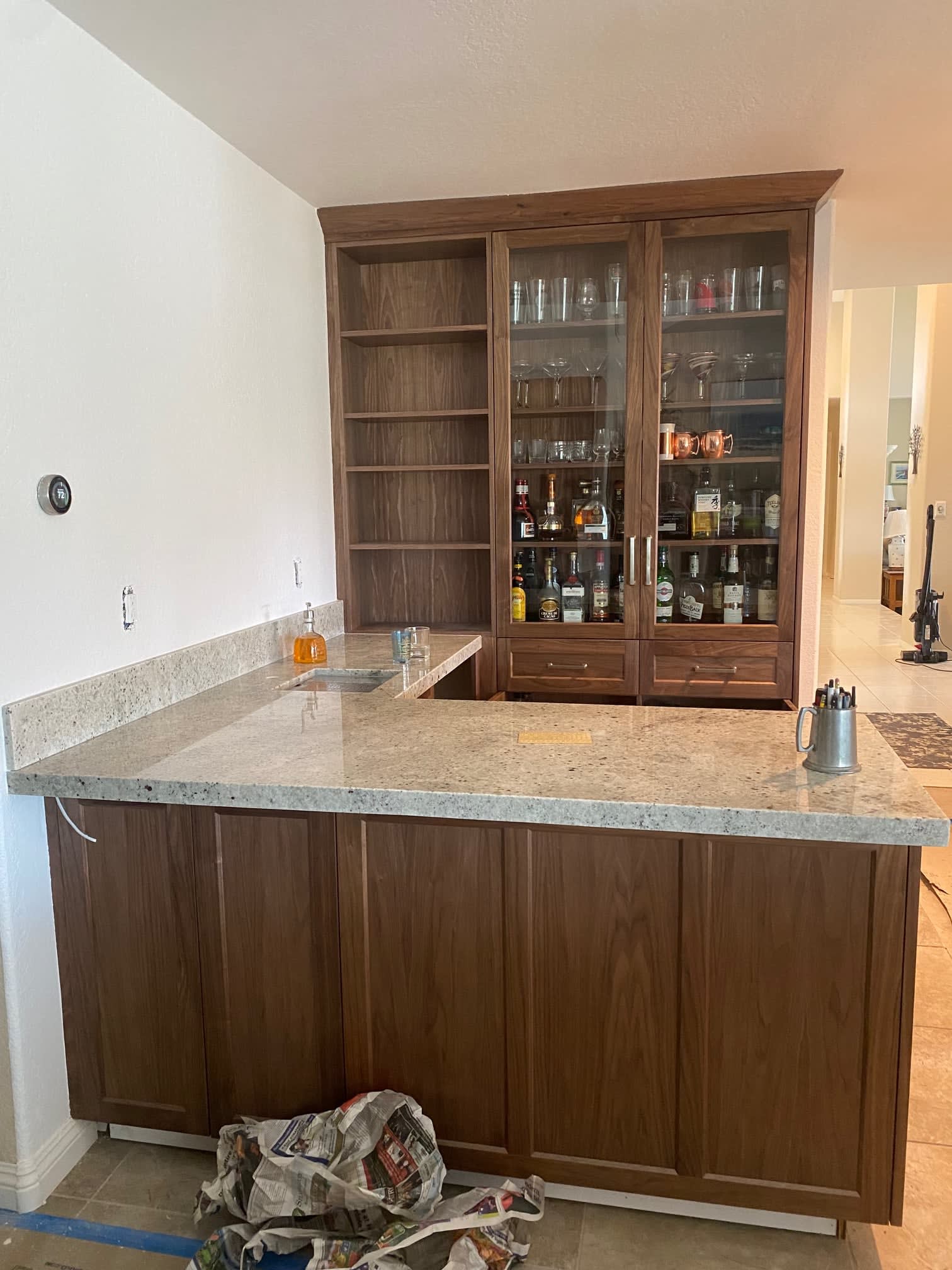
The history of frameless cabinets, also known as European-style cabinets, is closely tied to developments in furniture design and manufacturing that took place in post-World War II Europe, particularly in Germany and Scandinavia. Here's a concise overview of their evolution:
Early Roots (Post-WWII Europe – 1940s-1950s)
After World War II, there was a strong emphasis in Europe on efficient use of materials, cost-effective production, and streamlined design due to economic constraints and housing shortages.
German and Scandinavian designers pioneered a more modern, minimalistic approach to cabinetry that eliminated the traditional face frame used in American-style cabinets.
These frameless designs were modular, easier to mass-produce, and more adaptable to small living spaces.
Technical Innovation
Frameless cabinets use a box construction, typically made from particleboard or plywood, with doors and drawers attached directly to the cabinet sides (rather than a face frame).
The introduction of European hinges (concealed, adjustable, and mounted inside the cabinet box) was a critical innovation that allowed for this type of construction.
Frameless cabinets offer more storage space, cleaner lines, and a sleeker appearance.
Spread to North America (1960s–1980s)
European immigrants and global trade brought frameless cabinets to North America.
At first, American consumers were skeptical, favoring traditional, face-framed cabinetry.
However, by the 1970s and 1980s, frameless cabinets began gaining popularity, especially in modernist and contemporary homes, due to their efficient use of space and modern aesthetic.
Modern Era (1990s–Present)
Frameless cabinetry is now a mainstream option in both Europe and North America.
It is commonly used in kitchens, bathrooms, and office furniture.
The rise of ready-to-assemble (RTA) cabinets from companies like IKEA helped further popularize the frameless design globally.
Innovations in manufacturing and materials (like MDF and advanced laminates) have made frameless cabinets more durable and customizable than ever.
Key Features of Frameless Cabinets
No face frame; doors cover the entire front (full-overlay).
Modern, minimalist appearance.
More accessible interior storage.
Easier to manufacture in modular systems.


Comments